Tensions between Nintendo and Amazon have been simmering for years, and former Nintendo president Reggie Fils-Aimé has now shared new insight into what sparked the conflict.
The Origin of the Rift
Speaking at the NYU Game Centre Lecture Series, shared on the ResetEra forums, Fils-Aimé recalled a key moment during the Nintendo Wii and Nintendo DS era.
According to him, Amazon was aggressively trying to expand its gaming retail presence and allegedly pushed for what he described as “illegal” demands. The request involved significant financial backing from Nintendo so Amazon could offer the lowest prices and undercut competitors like Walmart.
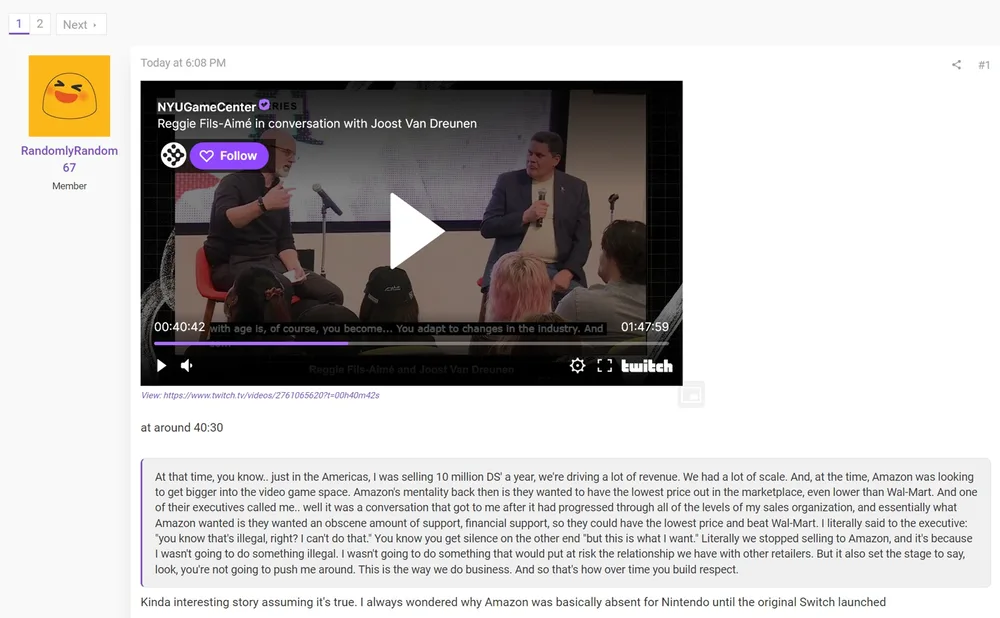
Fils-Aimé rejected the proposal outright, noting it could damage Nintendo’s relationships with other retail partners such as GameStop. As a result, Nintendo reportedly stopped supplying Amazon with inventory at the time.
Ongoing Friction Through the Years
Although Nintendo products returned to Amazon shelves around the launch of the Nintendo Switch in 2017, the relationship remained strained. Issues arose around third-party sellers, including concerns over used games and questionable listings.
These tensions resurfaced more prominently around the release of the Nintendo Switch 2 in 2025. Notably, Amazon’s U.S. platform initially lacked official support for the launch, surprising many consumers.
Reports suggested Nintendo was unhappy with third-party sellers undercutting suggested retail prices and the risk of international scalpers exploiting regional pricing differences. While Nintendo later denied some of these claims, skepticism among fans persisted.
Where Things Stand Now
Currently, a wide range of first-party Switch 2 titles and hardware are available again through Amazon. In some cases, the retailer has even matched Nintendo’s pricing adjustments, particularly after the company lowered digital game prices.
Still, given the history between the two companies, future disagreements over pricing strategies, distribution control, and marketplace policies seem likely.
The situation highlights a broader challenge in the gaming industry, balancing traditional retail partnerships with the dominance of global online marketplaces.